Let’s dismantle a massive digital publishing illusion right out of the gate: the era of typing “write me a book about business” into an AI text generator, exporting a messy, unformatted PDF, and expecting it to top the bestseller charts is completely dead. If you spend any time browsing self-publishing forums or digital entrepreneur communities in the United States, you will witness immense frustration. Thousands of beginner authors are complaining that their books are stuck at zero sales, and their accounts are getting buried by massive waves of automated machine noise.
The modern digital economy has undergone a severe structural evolution. American consumers are highly sophisticated. They absolutely refuse to pay a premium for lazy, unedited AI generations that they could easily prompt themselves for free.
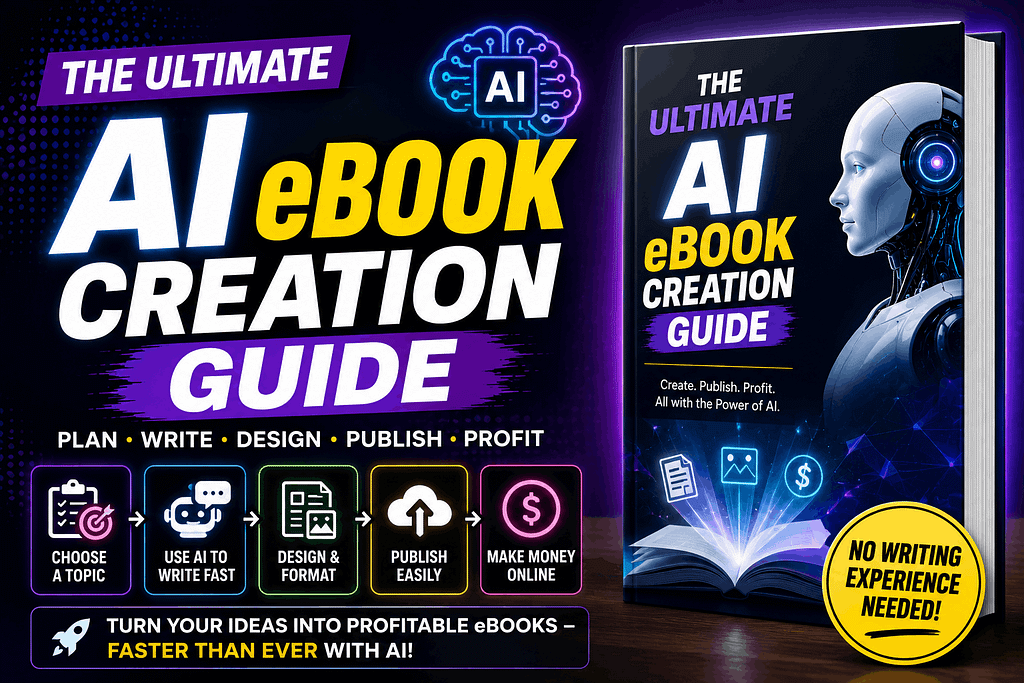
The elite digital operators who are quietly pulling down thousands of dollars in high-margin revenue every single month are not using artificial intelligence as a replacement for effort. They use it as a highly leveraged co-pilot. They identify complex operational bottlenecks, outline highly structured solutions, and use AI to accelerate the drafting process before applying a heavy human polish. If you want to bypass the entry-level noise and secure true financial leverage, you need a precise operational roadmap. This is your comprehensive, step-by-step AI eBook Creation Guide to building a highly profitable digital library.
1. Isolate High-Margin, High-Intent Niches
The absolute biggest mistake new publishers make is trying to write a generalized self-help or generic fiction book. To secure consistent US traffic and command premium pricing, you must target distinct, high-intent communities that actively require specialized information to solve immediate problems or advance their passions.
-
B2B Technical Playbooks: Do not write a broad book on “technology.” Instead, draft a highly specific technical manual. For example, write a comprehensive guide on setting up an Apache Spark cluster, or an advanced manual detailing how to clean HR survey data using Google Colab and MongoDB. American data science students and corporate managers will instantly pay $40 for a digital playbook that saves them twenty hours of manual coding.
-
Hyper-Niche Hobbyist Guides: Enthusiasts spend astronomical amounts of money on accurate, specialized information. Instead of a generic pet care book, compile an expert, highly visual guide detailing the dietary schedules, exact cage setup dimensions, and gender identification techniques for breeding exotic budgerigars and lovebirds.
-
Digital Creator Blueprints: Develop structured guides for other creators. If you know how to storyboard 2D animated children’s shows—like scripting a cosmic adventure such as The Great Gummy Bear Galaxy Quest for a channel like Wonder Wings Adventure—package that specific workflow into a how-to eBook for aspiring animators.
2. The AI Drafting Workflow (The Co-Pilot Method)
You cannot ask an AI to write an entire book in one prompt. The output will be incredibly repetitive, shallow, and boring. You must act as the creative director, feeding the AI specific, bite-sized tasks.
-
The Skeleton Framework: Start by using a model like Claude 3.5 Sonnet or ChatGPT to build your table of contents. Prompt: “Act as a senior data engineer. Outline a highly detailed, 10-chapter technical eBook on deploying Hadoop architectures. Include specific sub-sections for troubleshooting caching errors.”
-
Iterative Generation: Once the outline is perfect, generate the book section by section. Never generate more than 500 words at a time. Feed the AI your specific bullet points and personal insights for that specific chapter, and ask it to expand those thoughts into professional prose. This ensures the technical accuracy remains perfectly aligned with your expertise.
3. Formatting and Visual Engineering
An eBook is a visual product. If your text is a massive, unbroken wall of black-and-white font, readers will demand a refund.
-
The Layout: Use design tools like Canva or specialized formatting software like Atticus to structure your chapters. Break up text heavily with bold subheadings, bulleted lists, and call-out boxes for important tips.
-
The Cover Design: Your cover is your primary marketing asset. Use an advanced neural vision model like Midjourney v6 to generate a stunning, high-contrast cover image. Crucially, you must use an AI upscaler to push the resolution to a crisp 300 DPI. This ensures that the digital cover looks flawless on high-resolution Apple Retina displays and mobile screens, signaling premium quality to the buyer.