Let’s be brutally honest for a second: the dream of building a successful YouTube channel used to require an entire production company. You needed a scriptwriter to map out the ideas, a professional voice actor to read the lines, an editor spending 15 hours cutting B-roll, and an SEO expert obsessing over metadata. If you were a solo creator sitting in a home office in Raleigh or a coffee shop in Austin, the barrier to entry felt like a solid brick wall.
But as we move through 2026, that wall has completely crumbled.
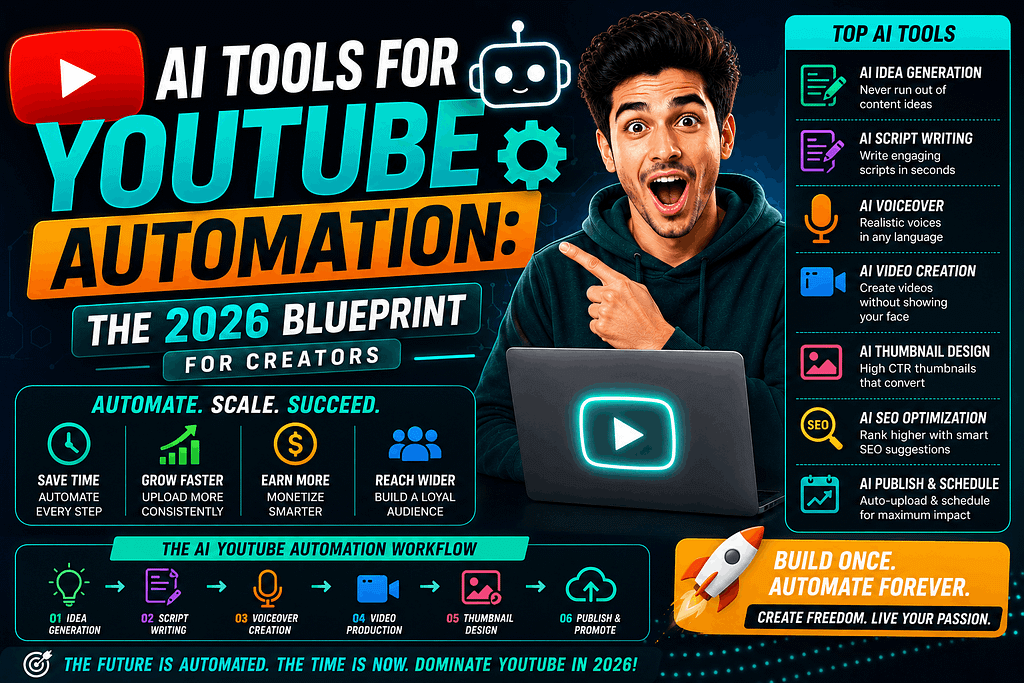
We are officially living in the era of Content Orchestration. The most successful faceless channels, cash-cow empires, and solo creators aren’t spending weeks creating a single video anymore. Instead, they are acting as directors—orchestrating a decentralized “ghost team” of highly specialized neural networks to handle the heavy lifting.
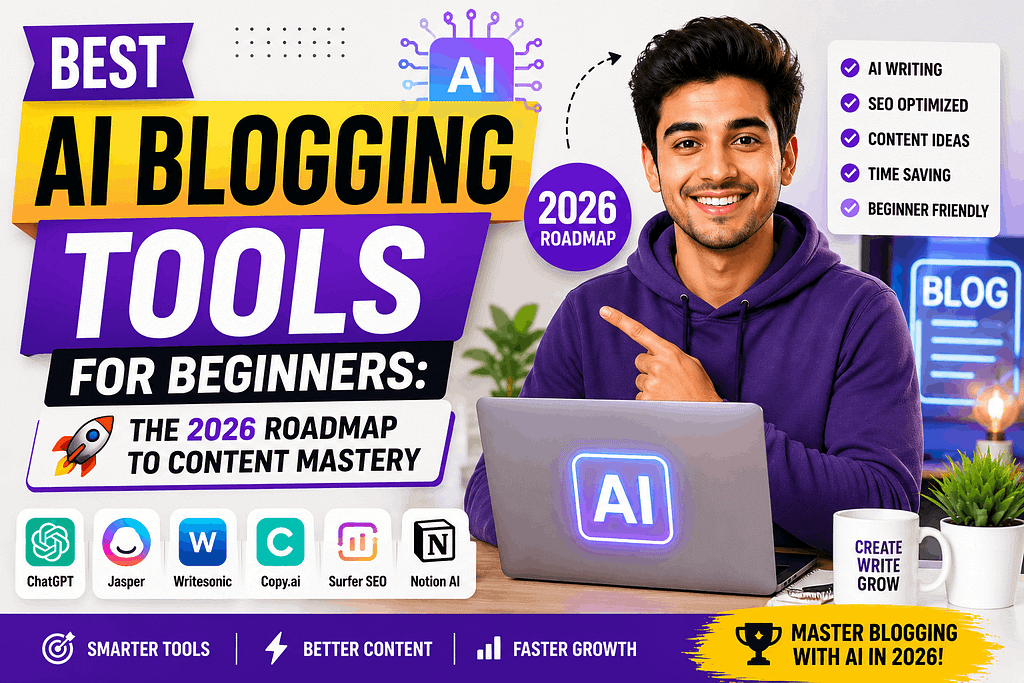
If you want to build a sustainable digital asset that captures high-CPM US traffic and generates steady revenue, you don’t need a massive budget. You just need the right system. This is your comprehensive, 1,000-word, human-centric guide to the best AI tools for YouTube automation in 2026.
1. The Core Strategy: The “Human-in-the-Loop” Framework
Before we look at the software, we have to address the elephant in the room: AI slop. YouTube’s 2026 recommendation engine is incredibly sophisticated. If you simply use a basic prompt tool to generate a generic script, feed it into a robotic text-to-speech bot, and pair it with unedited stock footage, your channel will remain a ghost town. The algorithm—and more importantly, American audiences—will hit the “Not Interested” button in a heartbeat.
To win, you must implement the Human-in-the-Loop model. The AI tools handle the velocity and structure, but you apply the creative direction, the subjective quality control, and the emotional hook. This hybrid workflow is how you scale production by 10x while maintaining the high quality that triggers organic algorithmic pushes.
2. Ideation & Real-Time Research: Perplexity AI
The foundation of any viral video is the concept. If nobody cares about the underlying question or topic, the best editing in the world won’t save your retention graph.
-
The Tool: Perplexity AI
-
Why it’s essential for beginners: Traditional keyword tools only show you historical data—what people searched for six months ago. Perplexity scans the live, current web, citing real-time sources, trending US news, and cultural shifts.
-
The Workflow: Instead of guessing, ask Perplexity to identify content gaps in your niche. For instance: “What are the most common un-answered frustrations small business owners have with automated bookkeeping software in 2026?” The tool will generate a data-backed list of high-intent topics that are perfect for a targeted video.
3. The Scripting Engine: Claude 4
Once you have your core concept, you need a script that keeps viewers glued past the critical 30-second drop-off mark.
-
The Tool: Claude 4
-
Why it’s essential for beginners: While other large language models write in a stiff, highly predictable corporate pattern, Claude 4 excels at conversational nuance, empathy, and rhythmic pacing. It sounds naturally human out of the box, making it highly effective at bypassing automatic spam filters.
-
The Workflow: Never give a vague prompt. Feed Claude a highly specific structural outline. Instruct it to open with a high-arousal emotional hook (like curiosity or relatable frustration), maintain short, punchy sentences, and introduce open loops that force the viewer to watch until the final segment to get the resolution.
4. Audio Architecture: ElevenLabs Speech-to-Speech
In 2026, traditional text-to-speech is a dead giveaway for low-effort channels. To capture premium ad rates from US viewers, your audio must sound rich, expressive, and distinctly human.
-
The Tool: ElevenLabs
-
Why it’s essential for beginners: The real secret weapon here is their Speech-to-Speech technology. Instead of converting text to synthetic audio, you record yourself reading the script into your phone. It doesn’t matter if you have background noise or a flat delivery—the AI captures your natural human breathing patterns, emphasis, and pauses. It then “masks” your recording with a high-end, studio-grade vocal model.
-
The Audio Polish: Run that output through Adobe Podcast AI (Enhance). This instantly strips away room echo and optimizes the frequencies, making a bedroom recording sound like it was mastered in a professional studio in New York City.
5. Visual Generation & Editing: InVideo AI & Midjourney v6
You have a killer script and flawless audio. Now you need to map out the visual narrative without spending days inside complex timeline software.
-
The Tools: InVideo AI and Midjourney v6
-
Why they are essential for beginners: For rapid scaling, InVideo AI allows you to input your script and audio, and it will automatically compile a rough draft using relevant B-roll, transitions, and text overlays in minutes.
-
The Custom Touch: If you are building a premium channel, use Midjourney v6 to generate unique, hyper-realistic, or cinematic images that define your channel’s specific visual brand. Replacing generic, repetitive stock footage with custom AI-generated art is the fastest way to increase your channel’s visual authority.
6. The Short-Form Multiplier: OpusClip Pro
Long-form content builds deep authority, but short-form vertical video (Shorts, Reels, TikTok) is the most powerful discoverability engine in the world right now.
-
The Tool: OpusClip Pro
-
Why it’s essential for beginners: You do the work once to create a 10-minute YouTube video. Then, you paste that link into OpusClip. The AI uses facial tracking and semantic analysis to automatically clip out the 5 most engaging, self-contained segments, crops them to a vertical 9:16 aspect ratio, and adds trendy, dynamic captions.
-
The Result: This gives you an endless supply of high-retention Shorts to drive thousands of new subscribers back to your main long-form library on autopilot.
7. Maximizing Click-Through Rates: Thumbnail Strategy
Your video could be a masterpiece, but if nobody clicks on it, it doesn’t exist to the algorithm.
To maximize your Click-Through Rate (CTR), use Canva Magic Studio to isolate your central visual element, strip the background, and add hyper-vibrant, high-contrast text layers. In 2026, YouTube allows you to upload up to three thumbnails to natively split-test them. Create one version based on Curiosity, one based on Value, and one based on Urgency, and let the real-time viewer data choose the winner.
Are you going to launch your first automated channel around Tech Tutorials, Personal Finance, or Deep Work Productivity? Let’s map out your content pillars in the comments below!