Being a student in the United States can be expensive. Between tuition, textbooks, transportation, food, and everyday expenses, even students who receive financial support may find themselves looking for extra money.
Getting a traditional part-time job is one option, but it isn’t always easy to fit fixed shifts around classes, assignments, exams, and personal responsibilities.
What if you could use something you already know to start earning online?
You don’t necessarily need an expensive laptop, a large social media following, or years of professional experience. Skills such as writing, designing, explaining difficult topics, editing videos, or organizing information can become the foundation of a small online service.
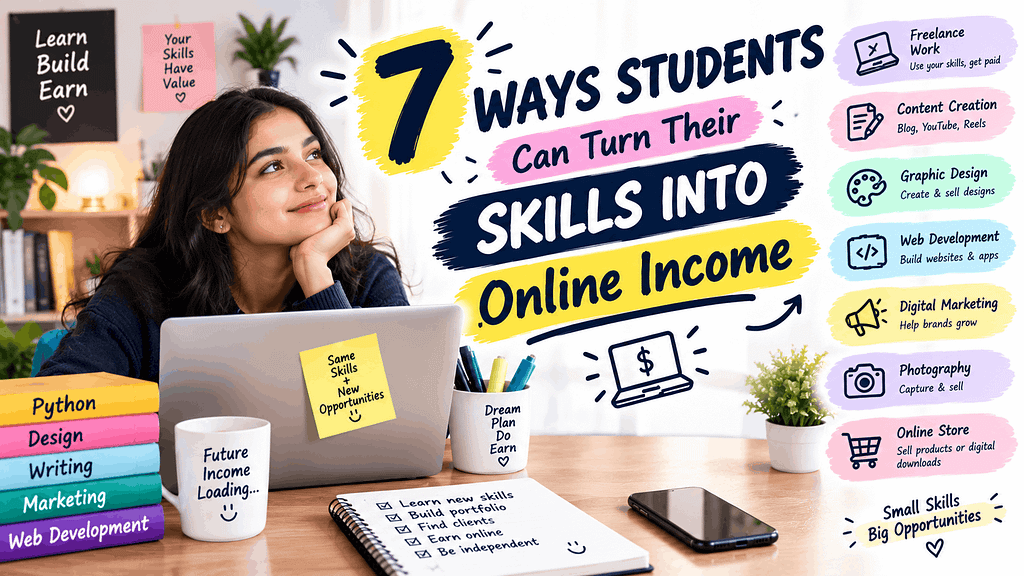
These 7 ways students can turn their skills into online income focus on practical opportunities that can fit around college life. Your results will depend on your ability, the demand for your work, the time you invest, and how effectively you find customers. None guarantees immediate earnings, but each offers a starting point worth exploring.
1. Turn Your Writing Skills Into Freelance Work
If you enjoy writing, you could help individuals and businesses create blog posts, website content, product descriptions, email newsletters, or social media captions.
You don’t have to begin by writing lengthy articles. Small projects can help you learn how clients communicate their requirements and what quality work involves.
For example, a student who enjoys technology might write short product descriptions, while someone interested in fitness could help a trainer prepare newsletter content.
How to get started:
- Choose one type of writing service.
- Prepare two or three original writing samples.
- Create a simple portfolio using a document or website.
- Explore freelance marketplaces such as Upwork or Fiverr.
- Contact potential clients with a specific, professional offer.
Start with projects that fit your existing abilities and available time. Meet deadlines, proofread your work, and never promise expertise you don’t have.
2. Offer Graphic Design and Presentation Services
You don’t need to be a professional artist to create useful visual content. If you understand layout, typography, colors, and clear communication, you may be able to help people prepare presentations, flyers, social media graphics, or simple business documents.
Tools such as Canva can help beginners create designs without starting from a blank page.
Potential customers include small businesses, independent professionals, student organizations, and creators who need attractive visuals but lack the time to make them.
How to get started:
Create three sample designs for different purposes, such as a promotional flyer, a presentation cover, and a social media post. Put them into a small portfolio and explain what you can deliver.
Remember to check the commercial-use terms for templates, fonts, photographs, and other design elements. Your service should provide real value, not simply reuse a template without considering the client’s needs.
3. Earn Money by Tutoring Online
Are you particularly good at mathematics, English, science, introductory programming, or another academic subject?
Online tutoring lets you use that knowledge to help someone who is struggling with the same material.
For example, a college student who understands introductory statistics could tutor high school students in basic statistical concepts. Someone comfortable with coding might explain beginner programming exercises.
How to get started:
- Select a subject you genuinely understand.
- Prepare a short lesson with examples.
- Decide which age group or learning level you can support.
- Explore tutoring platforms and their eligibility requirements.
- Offer clear session times that work around your classes.
Good tutoring involves patience and communication, not just knowing the answer. Help learners understand the reasoning instead of completing their graded assignments for them.
4. Edit Short Videos for Creators and Small Businesses
Short-form video is widely used by businesses, educators, and online creators. Many need help trimming footage, adding captions, improving pacing, and preparing clips for different platforms.
If you enjoy editing videos, this can become a practical service to learn while studying.
You can start with free or low-cost editing software and build your skills before investing in expensive equipment.
How to get started:
Create a few short sample videos using your own footage or material you have permission to use. Demonstrate clean cuts, readable captions, appropriate pacing, and good sound.
Then contact small creators or businesses whose content could benefit from editing support.
Be specific about what your service includes. A simple package might cover editing one short video with captions and one revision. Agree on deadlines and payment before beginning paid work.
5. Sell Digital Products Based on Your Knowledge
Digital products allow you to package something useful and offer it for sale online.
Examples include budget spreadsheets, printable planners, study schedules, resume templates, checklists, and original educational resources.
Suppose you’re good at organizing your college workload. You could create a weekly assignment tracker that helps other students record deadlines and plan study sessions.
How to get started:
First, identify a problem people regularly experience. Create a simple product that addresses it, test it yourself, and improve it before listing it on a marketplace or your own website.
Think about who would use the product and why they would choose yours over similar options.
Digital products can be sold more than once, but that doesn’t make them guaranteed passive income. You’ll still need to attract customers, answer questions, improve listings, and account for platform fees.
6. Provide Social Media Support
If you understand how social media works, you may be able to help small businesses maintain their online presence.
Services can include writing captions, planning weekly content, preparing simple graphics, organizing post ideas, and scheduling approved posts.
A neighborhood café, independent fitness coach, or local shop might need assistance but lack the budget for a full-time marketing employee.
How to get started:
Choose a type of business you understand and prepare a sample one-week content calendar. Include a few post ideas, example captions, and suggested visuals.
Use your sample to demonstrate how you could save the business owner time.
Don’t promise viral posts or a guaranteed increase in sales. Focus on the work you can control, such as consistent content planning, clear communication, and meeting deadlines.
7. Offer Research, Spreadsheet, or Data-Organization Services
Students who enjoy working with information can explore simple research and data-organization tasks.
Potential services include cleaning spreadsheets, formatting data, organizing survey responses, compiling publicly available information, or preparing basic charts and summaries.
For example, a small business might need help organizing a product list or turning an untidy spreadsheet into a more readable report.
How to get started:
Practice using spreadsheet tools such as Google Sheets or Microsoft Excel. Build a sample project with fictional or appropriately licensed data to demonstrate your skills.
Offer a clearly defined service, such as formatting a spreadsheet or organizing a list of records.
Protect confidential information, follow client instructions, and check your results carefully. If you’re working with data, don’t claim that you performed complex statistical analysis when you only completed basic formatting.
How to Find Your First Online Customer
Choosing a skill is only the beginning. You also need to show people what you can do.
Start with a small, manageable plan:
- Choose one service. Avoid trying to launch five side hustles simultaneously.
- Create a portfolio. Two or three good samples can be more useful than a long list of unproven claims.
- Identify potential customers. Look for people or businesses that genuinely need your service.
- Write a clear offer. Explain what you’ll deliver, how long it will take, and what the customer receives.
- Track your results. Record your time, income, expenses, and feedback so you can improve.
Be cautious about online opportunities that require large upfront payments, promise guaranteed income, or ask you to pay money to unlock a supposed job. Verify platforms and clients before sharing sensitive information.
If you’re in the United States, also consider your work authorization if applicable, your school’s rules, platform eligibility, and any tax obligations associated with self-employment income.
Final Thoughts
These 7 ways students can turn their skills into online income show that earning money online doesn’t always require starting a complicated business.
A useful skill, a small portfolio, and a clear service can give you a starting point. Freelance writing, graphic design, tutoring, video editing, digital products, social media support, and spreadsheet services all offer different ways to explore earning opportunities.
You don’t need to become successful overnight. Choose one skill, practice it, and see whether people are willing to pay for the value you provide.
Most importantly, protect your study time. Your side hustle should support your goals as a student rather than make it harder to complete your education.
At Earnify05, the aim is to help students explore practical income opportunities, develop useful skills, and make smarter financial decisions without falling for unrealistic promises.