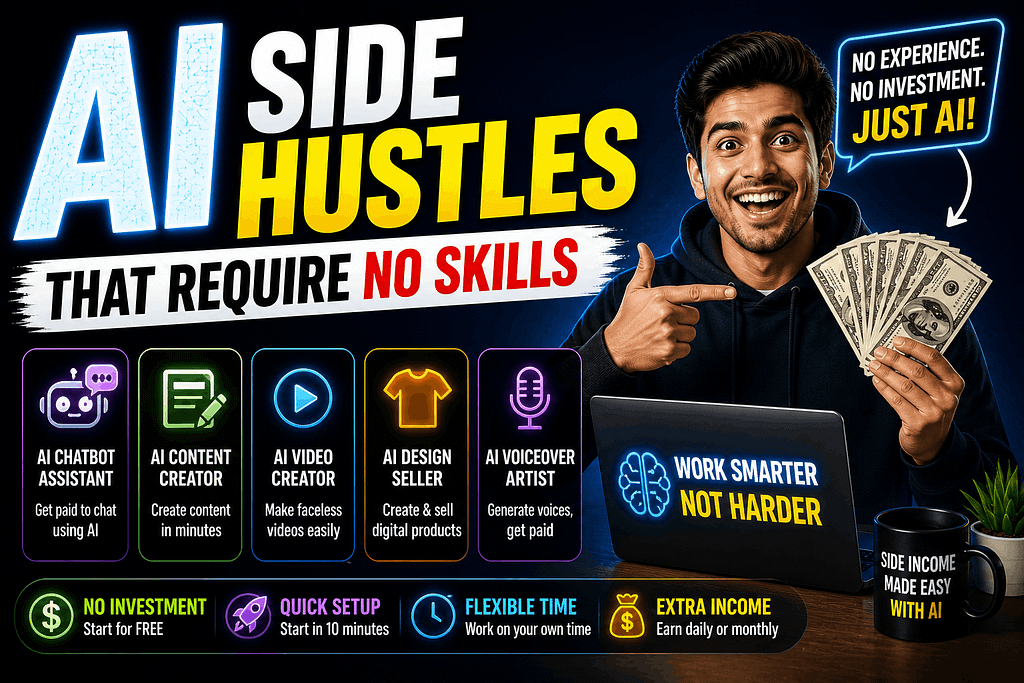

Making money online sounds simple until you actually try it.
You’ll find hundreds of videos promising quick cash, passive income, automated businesses, and effortless side hustles. Some ideas are legitimate. Others make the process look much easier than it really is.
The smarter approach is to stop looking for one magical income source and start building systems.
A system is different from a one-time hustle.
Instead of constantly asking, “How can I make money today?”, you’re building a process that repeatedly creates opportunities to earn.
That might mean getting freelance clients, selling a digital product, publishing content, earning affiliate commissions, or using AI to deliver a service faster.
These Powerful Income Systems That Work Daily aren’t guaranteed money machines. They require work, testing, and patience. But once established, they can create opportunities every day instead of forcing you to start from zero every morning.
For U.S. readers, there’s another important point: income from side jobs, freelancing, online sales, and other gig activities can be taxable. The IRS says gig income generally must be reported, even when it’s part-time or when you don’t receive an information form.
With that in mind, let’s look at 11 systems worth considering in 2026.
1. Freelance Skill System
Freelancing remains one of the easiest ways to turn an existing skill into income.
You could offer:
- Video editing
- Graphic design
- Copywriting
- Data analysis
- Web development
- Social media management
- SEO
- AI automation
- Virtual assistance
The important word is system.
Don’t simply create a profile and wait.
Build a process:
Find prospects → Send offers → Get clients → Deliver → Collect reviews → Ask for referrals → Repeat
Once you understand your numbers, you can improve the system.
For example, if you contact 50 qualified prospects and five respond, you can work on improving that response rate.
2. AI-Powered Service System
AI creates another opportunity: delivering existing services more efficiently.
You don’t need to sell “AI.”
Instead, sell the result.
For example:
A business owner doesn’t necessarily want an AI-written blog.
They want more useful content without spending their entire weekend writing.
A YouTuber doesn’t necessarily want AI editing.
They want videos edited faster.
A small business doesn’t necessarily want automation software.
They want fewer repetitive tasks.
That difference can dramatically change how you position your service.
Your system becomes:
Client problem → AI-assisted workflow → Human review → Final result → Recurring service
3. Digital Product System
Digital products can be attractive because you create the product once and potentially sell it repeatedly.
Examples include:
- Notion templates
- Excel spreadsheets
- Budget planners
- Resume templates
- Checklists
- E-books
- Study resources
- Social media templates
- Business worksheets
- Printable planners
The hard part is creating something people actually want.
Don’t begin with:
“What can I make?”
Begin with:
“What problem can I solve?”
A useful $10 template can be more valuable than a massive 100-page product nobody needs.
4. Affiliate Content System
Affiliate marketing works by recommending products or services and earning a commission when eligible purchases or actions occur.
The system can be built around:
Content → Traffic → Recommendation → Click → Conversion
You could create:
- Product comparisons
- Tutorials
- Buying guides
- Software reviews
- “Best tools” articles
- YouTube videos
- Pinterest content
The key is trust.
Don’t recommend something simply because it has a high commission.
Recommend products that genuinely fit your audience.
Over time, useful content can continue attracting visitors through search and social platforms.
5. YouTube Content System
YouTube can become an income system rather than simply a hobby.
The process could look like:
Research → Script → Record → Edit → Publish → Analyze → Improve
YouTube provides creators with multiple monetization options through the YouTube Partner Program, including advertising, memberships, Shopping, and YouTube Premium revenue, subject to eligibility and policy requirements.
But don’t build your strategy around ad revenue alone.
A channel can potentially support:
- Affiliate income
- Sponsorships
- Digital products
- Services
- Memberships
- Courses
- Brand partnerships
The audience is the asset.
The monetization methods can come later.
6. Blog and SEO System
A blog can become another long-term traffic engine.
The basic system is:
Keyword research → Helpful article → Search traffic → Email subscriber → Product/affiliate opportunity
Don’t write 500 articles just to fill your website.
Create useful content around specific questions.
For example, instead of:
“Money Tips”
create:
“How to Build an Emergency Fund on a $3,000 Monthly Income”
Specific problems usually create better content opportunities.
You can also connect your blog to your YouTube channel, Pinterest account, email newsletter, and affiliate strategy.
That creates a content ecosystem instead of isolated posts.
7. Newsletter Income System
Email is one of the most useful assets because you’re building a direct relationship with your audience.
A simple newsletter system could be:
Free content → Email signup → Useful newsletter → Product/affiliate/service recommendation
Your newsletter might focus on:
- AI productivity
- Personal finance
- Career growth
- Freelancing
- Online business
- Investing education
The goal isn’t to email people every day just to sell something.
Give readers a reason to open the next email.
Useful information builds trust.
8. Print-on-Demand System
Print-on-demand allows creators to sell products without keeping large amounts of inventory themselves.
Potential products include:
- T-shirts
- Mugs
- Posters
- Stickers
- Tote bags
- Phone cases
The basic model is:
Niche research → Original design → Product listing → Marketing → Customer order → Fulfillment
The biggest mistake is creating random designs for everyone.
Choose a specific audience.
For example:
Funny stickers for programmers
is more targeted than:
Funny stickers
A niche gives you a clearer customer and clearer marketing message.
9. Digital Asset System
Some online assets can continue attracting attention after you’ve created them.
Examples:
- YouTube videos
- Blog articles
- Pinterest Pins
- Templates
- Online calculators
- Educational guides
- Email sequences
- Digital libraries
This doesn’t mean they’re completely passive.
Old content can become outdated.
Links can break.
Search rankings can change.
But a strong digital asset can continue working after the initial creation.
That’s what makes it powerful.
Instead of getting paid only for hours worked, you’re creating something that can potentially generate value repeatedly.
10. Subscription Income System
Recurring revenue can make a business more predictable.
Instead of selling something once, create a reason for customers to stay.
Examples:
- Premium newsletter
- Membership community
- Monthly template library
- Software subscription
- Coaching membership
- Paid resource library
- Monthly design service
Imagine selling a $15 monthly membership.
You don’t need thousands of customers to create meaningful recurring revenue—but you do need to provide enough ongoing value that customers want to remain subscribed.
The challenge is retention.
Getting a customer is only the beginning.
Keeping them is the real business.
11. Multiple-Income Content System
This is my favorite long-term model.
Instead of creating separate content for every income stream, build one content engine that supports several.
For example:
One YouTube Video
can become:
YouTube video
↓
Short-form clips
↓
Blog article
↓
Pinterest Pins
↓
Newsletter
↓
Social media posts
↓
Affiliate opportunity
↓
Digital product idea
One piece of research can therefore create multiple pieces of content.
That’s leverage.
And AI can make the process considerably faster by helping with outlines, repurposing, transcription, idea generation, and organization.
However, the final content should still be reviewed by a human and provide genuine value.
How to Build Your First Income System
Don’t try all 11 simultaneously.
That’s one of the fastest ways to become overwhelmed.
Start with one skill or audience.
Step 1: Choose Your Strength
Ask yourself:
What can I already do?
Maybe you’re good at:
- Writing
- Editing
- Design
- Data
- Teaching
- Research
- Sales
- Technology
Start there.
Step 2: Choose One Customer
Don’t target everyone.
Choose a specific audience.
For example:
Real estate agents
Small businesses
YouTubers
College students
Online coaches
E-commerce sellers
The clearer the customer, the easier it becomes to design an offer.
Step 3: Solve One Problem
Your income system should solve a problem.
For example:
“I help real estate agents turn their listings into short-form videos.”
That’s much stronger than:
“I do AI services.”
Step 4: Create a Repeatable Process
Document what you do.
For example:
Lead generation → Discovery call → Proposal → Payment → Delivery → Follow-up
Once the process works, improve it.
Step 5: Track the Numbers
Don’t rely entirely on feelings.
Track:
- Leads
- Responses
- Customers
- Revenue
- Expenses
- Conversion rate
- Repeat customers
- Traffic
- Email subscribers
You don’t need complicated software at the beginning.
A simple spreadsheet can work.
Can These Systems Really Make Money Every Day?
Potentially—but don’t misunderstand the headline.
“Works daily” doesn’t mean you’ll receive money every single day.
Income can be unpredictable.
One day you might make $0.
Another day you could receive several sales.
The purpose of a system is to create ongoing opportunities, not guarantee daily payments.
For example, a YouTube video can generate views while you’re sleeping, but it doesn’t mean you’ll earn money every night.
Likewise, an online store can receive orders automatically, but sales aren’t guaranteed.
The strongest systems combine:
Consistency + useful products + audience + distribution + optimization
Don’t Forget U.S. Taxes
If you’re earning money from freelancing, online sales, content creation, or other side work in the U.S., keep records.
The IRS states that gig income can include freelance services, online sales, renting property, and other platform-based activities, and that such income generally needs to be reported.
Keep track of:
- Revenue
- Business expenses
- Platform fees
- Receipts
- Payment records
- Relevant tax documents
If your situation is complicated, consider speaking with a qualified tax professional.
Frequently Asked Questions
What are income systems?
Income systems are repeatable processes designed to consistently create opportunities to earn money. They can include freelancing, digital products, affiliate marketing, content creation, subscriptions, or online services.
Can I create an income system with no money?
Yes, some systems can be started with very little upfront capital. Freelancing, content creation, and certain digital services may primarily require time, skills, and internet access.
What is the best income system for beginners?
Freelancing can be a practical starting point because you can sell an existing skill without first building a large audience.
Can AI help build an income system?
Yes. AI can assist with research, content planning, customer support, repetitive tasks, data organization, and creative workflows. However, the underlying business still needs a real customer and a valuable solution.
Are daily income systems passive?
Not necessarily. Many require significant work upfront and ongoing maintenance. “Systemized” income is a better way to think about them than completely passive income.
How long does it take to build an income system?
There is no universal timeline. A freelance service can potentially get its first customer relatively quickly, while SEO websites, YouTube channels, newsletters, and digital products may take considerably longer to gain traction.
Conclusion
The biggest mistake people make with online income is constantly jumping from one idea to another.
One week it’s dropshipping.
The next week it’s affiliate marketing.
Then AI freelancing.
Then YouTube.
Then digital products.
Nothing gets enough time to work.
Instead, choose one opportunity and turn it into a system.
Build the offer.
Find the audience.
Create the process.
Track the results.
Improve what works.
Then add another income stream once the first one becomes stable.
That’s the real idea behind these Powerful Income Systems That Work Daily.
You don’t need 11 businesses.
You need one good system that you understand, one audience you can help, and enough consistency to make the process better over time.
At Earnify05, that’s the approach worth remembering: don’t chase overnight money. Build assets, skills, audiences, and systems that can keep creating opportunities long after today’s work is finished.