Let’s dismantle a massive digital illusion right out of the gate: the era of typing “a pretty sunset” into an image generator, slapping the raw, pixelated file onto a crowded marketplace, and waking up rich is completely over. If you spend five minutes browsing digital creator subreddits, e-commerce forums, or artist communities in the United States, you will witness immense frustration. Thousands of beginners are complaining that their organic traffic has flatlined and their conversion rates are sitting at zero.
The internet is thoroughly flooded with lazy, unedited machine noise. In response, modern digital marketplaces have built highly sophisticated visual and semantic filters designed to suppress low-effort spam. Furthermore, modern USA consumers are highly educated; they refuse to pay a premium for generic assets they could easily generate themselves for free on their phones.
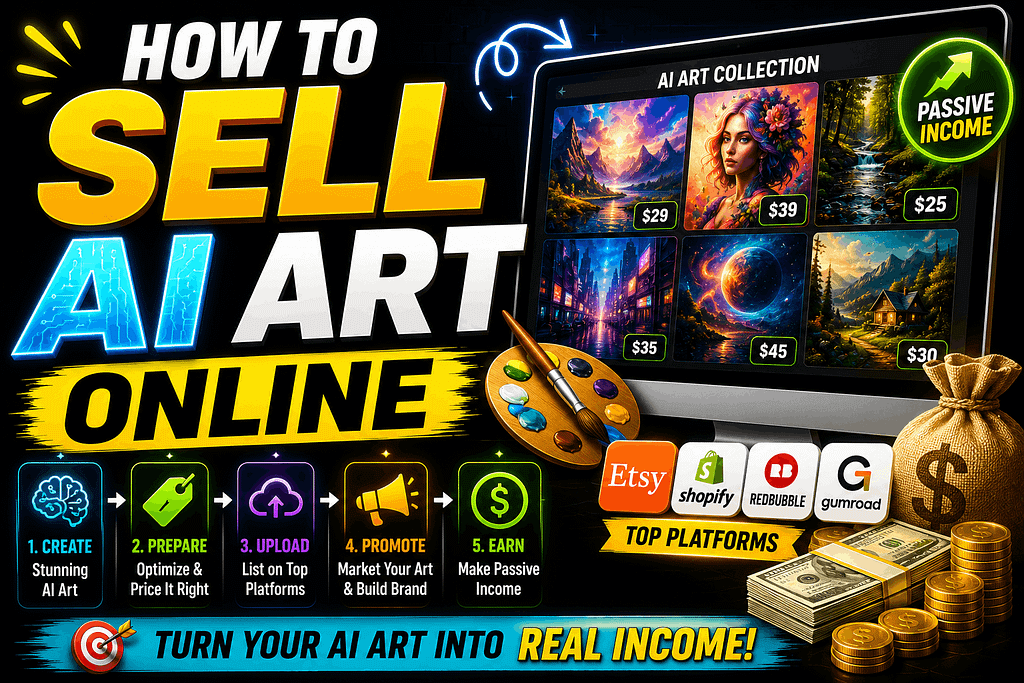
To win in 2026, you must operate like a digital engineer, not a spammer. You must use artificial intelligence to automate the grueling drafting phase, reserving your human energy for quality control, curation, formatting, and commercial distribution. If you want to cut through the digital noise and build an independent income engine, this is your comprehensive, step-by-step guide on how to sell AI art online and secure real digital equity.
1. The Quality Control Pipeline (Adding Human Value)
The absolute biggest mistake beginners make is uploading raw AI files. If you do this, you will immediately receive one-star reviews for unusable formats and poor print quality. Under current legal and commercial standards, raw AI outputs hold very little value. You must implement a rigid quality control pipeline to add genuine human value and protect your brand.
-
The 300 DPI Print Mandate: Native AI generators often output files at 72 DPI (Dots Per Inch), which is designed for screens but looks terrible when printed. You must run every single asset through a high-fidelity AI upscaler (like Topaz Gigapixel or similar tools) to achieve a crisp 300 DPI minimum. This ensures that when a US customer prints your digital download on physical cardstock or a large canvas, the result is flawlessly sharp.
-
Color Calibration (RGB vs. CMYK): Digital screens display colors in RGB, but physical printers use CMYK. If you are selling printable wall art, you must use editing software to convert your color profiles to CMYK. This prevents your vibrant neon designs from printing as washed-out, muddy posters, drastically reducing customer refund requests.
-
Vectorization for Crafters: If you are selling to the massive US crafting communities (such as Cricut or Silhouette users), they cannot use standard JPEG files. They require SVG (Scalable Vector Graphics) cut files. Use automated tracing software to convert your AI-generated flat illustrations into clean, layered vector paths that cutting machines can actually read.
2. Isolate High-Margin, High-Intent Niches
Do not launch a generalized storefront that tries to sell random portraits and generic landscapes to everyone. To capture consistent, high-paying traffic, you must target distinct, high-intent communities that actively require digital visual tools to solve immediate problems.
-
Seamless Repeating Pattern Tiles: Independent textile manufacturers, boutique wallpaper brands, and digital scrapbookers are constantly hunting for original visual textures. Use advanced neural vision models like Midjourney v6 and append the native
--tilecommand parameter to your prompts. The engine will force the pixels to form a mathematically perfect, repeating edge. Package these high-resolution graphics into themed bundles, allowing buyers to stretch the asset across an infinite digital canvas without ever showing a line break. -
Print-on-Demand (POD) Apparel Masks: The streetwear and custom apparel market moves on fast visual trends. Generate high-resolution, gritty abstract textures—such as distressed volcanic rock or cyberpunk circuitry. Use layout software to mask these textures inside bold, heavy graphic typography. You can integrate directly with POD partners like Printful, allowing you to sell physical hoodies and posters across the US with zero upfront inventory costs.
-
Atmospheric Visual Environments: The remote workforce has created a permanent demand for focused aesthetics. Generate deep, cinematic background loops—like cozy dark academia libraries or retro lofi workstations—and sell them as premium desktop theme kits or background assets for video editors.